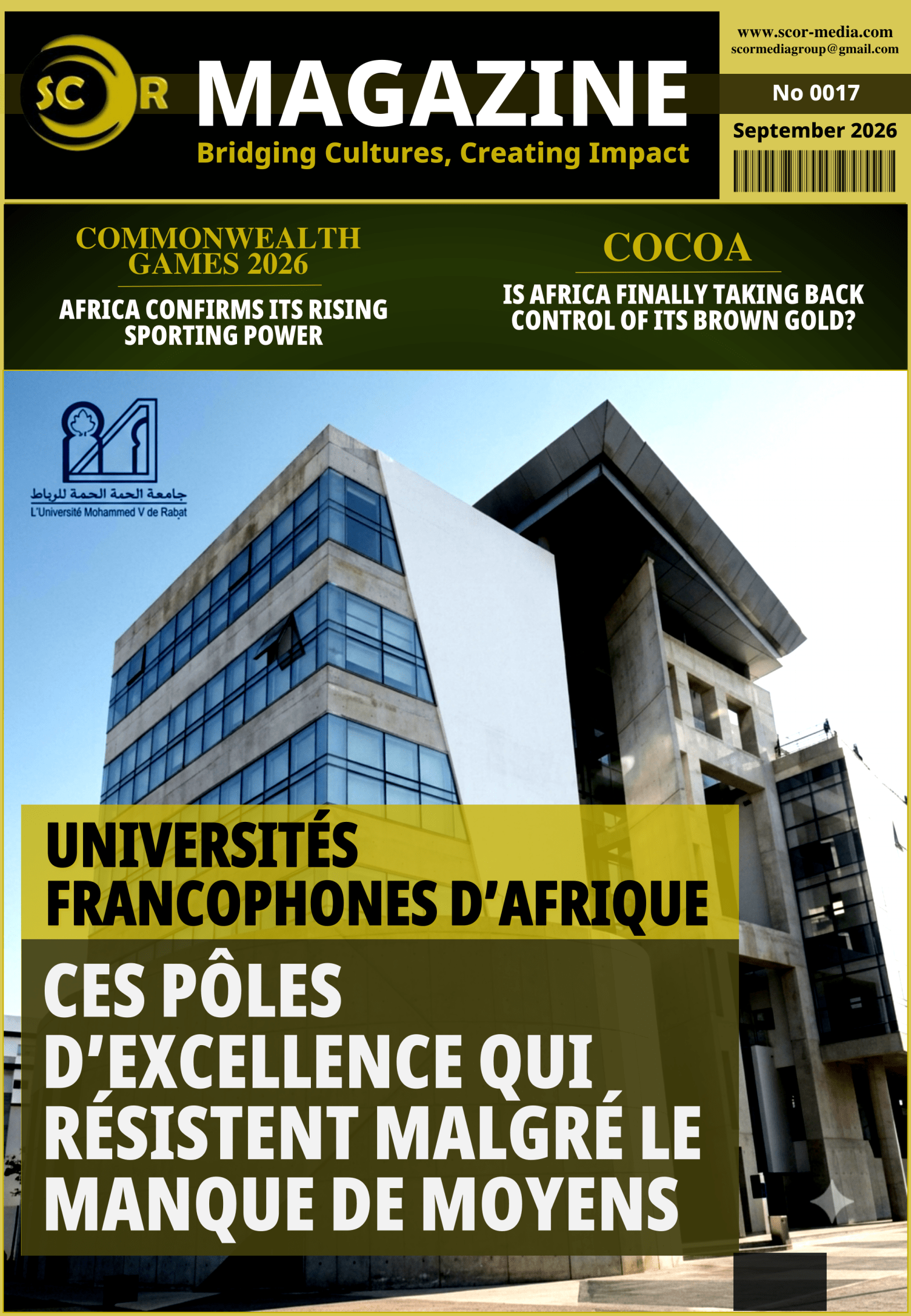
AFRICA RECLAIMING ITS DESTINY
Africa is changing. Slowly, sometimes painfully, but with a conviction that increasingly seems to be taking hold: the desire to no longer be merely the continent that supplies raw materials, consumes finished products and bears the consequences of decisions made elsewhere. From cocoa fields to universities, from social media to sports arenas, one question now cuts across Africa’s realities: how can Africa regain control of its own destiny?
Economically, the debate surrounding cocoa is emblematic. For decades, Africa has produced a large share of the world’s cocoa without capturing an equivalent share of the value created through its processing. The drive to better organize value chains, process more locally and gain greater influence in global markets reflects an essential realization: the real challenge is no longer simply to produce, but to create wealth from what we produce. The AfCFTA carries the same ambition on a continental scale. But African integration can only become a reality if economic borders, trade barriers and protectionist instincts finally give way to genuine economic solidarity.
This reclaiming of control also requires diversification. Botswana is turning to hemp as it prepares for a post-diamond economy, while Namibia is seeking greater room for maneuver in the face of mounting debt. These experiences remind us that no economy can sustainably depend on a single resource.
But development cannot be measured in figures alone. It also takes place within society. Social media gives Africa’s youth unprecedented power of expression and influence, while exposing the same generation to the dangers of misinformation, constant comparison and the pursuit of visibility. In higher education, Francophone African universities continue, despite limited resources, to train generations capable of carrying the continent’s ambitions forward. They deserve more than simple recognition: they need investment commensurate with their strategic role.
Culture, too, is becoming an instrument of power. West African rap is emerging as a formidable force of influence, while the loss of voices such as Bissi Mag reminds us how fragile Africa’s cultural memory remains. Preserving these voices means preserving a part of our identity.
And then there is sport. The crowning of the Indomitable Lionesses at the 2026 Women’s Africa Cup of Nations, alongside Africa’s performances at the Commonwealth Games, illustrates an undeniable reality: Africa is no longer content simply to participate; it wants to win and assert itself.
Economy, governance, agriculture, education, culture and sport: the battles may be different, but the ambition is the same. Africa is on the move. The challenge now is to transform this energy into sustainable strategies, this growing awareness into action, and these individual successes into genuine continental momentum. Perhaps the time has come to stop asking what place the world is willing to give Africa and start building the place Africa intends to occupy.

