SCOR MAGAZINE N°16

Africa Is No Longer Waiting for Its Moment, It Is Building Its Future.

Africa is at a defining moment in its history. Long viewed as a continent of immense potential, it is now emerging as a key player determined to shape the economic, technological and geopolitical landscape of the 21st century. This new edition of SCOR Magazine reflects an Africa on the move, driven by innovation, creativity and ambition.

From the Morocco–Nigeria gas pipeline megaproject to the rapid emergence of Africa’s space economy, the continent is demonstrating its determination to strengthen its energy and technological sovereignty. At the same time, agriculture highlights one of Africa’s greatest paradoxes: endowed with exceptional natural resources, the continent has everything it needs to become the world’s breadbasket, provided it accelerates its transformation, industrialisation and value addition.

This momentum is above all driven by the women and men shaping Africa’s future. The journey of Professor Pierre Nguimkeu reflects the excellence of African talent on the global stage, while the African diaspora continues to prove its strategic value by bringing investment, expertise and international networks that contribute to the continent’s development.

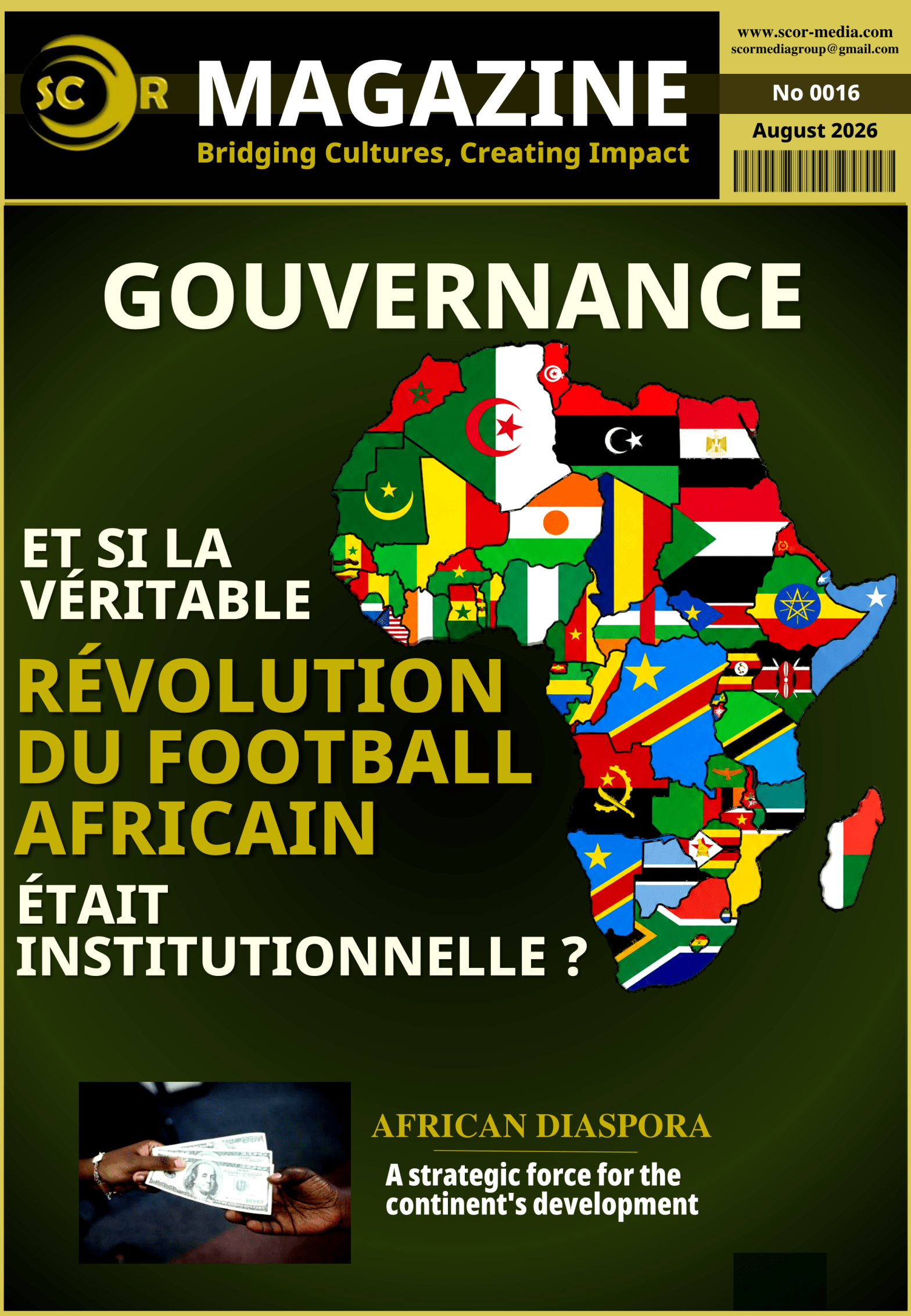
Sport offers another powerful lesson. At the 2026 FIFA World Cup, Africa earned the world’s respect, but not yet the ultimate prize. This raises an important question: could the next great revolution in African football be institutional rather than sporting? Talent alone is no longer enough; strong governance has become a decisive factor for lasting success.

Social challenges remain equally pressing. Inflation, unemployment and economic insecurity continue to place Africa’s youth under growing pressure, even though they represent the continent’s greatest asset. Meanwhile, African culture and fashion are gaining unprecedented global recognition, proving that identity, creativity and innovation have become powerful drivers of international influence.

Through these diverse perspectives, one conviction stands out: Africa’s future will depend less on the resources it possesses than on its ability to transform them into lasting opportunities. More than ever, Africa is no longer waiting for its future, it is building it.

SCOR MAGAZINE N°16


L’Afrique n’attend plus son heure, elle construit son avenir

L’Afrique est à un tournant de son histoire. Longtemps perçue comme un continent de promesses, elle s’affirme désormais comme un acteur qui entend peser sur les grands équilibres économiques, technologiques et géopolitiques du XXIᵉ siècle. Ce nouveau numéro de SCOR Magazine illustre cette Afrique en mouvement, portée par l’innovation, la créativité et l’ambition.

Du mégaprojet de gazoduc Maroc-Nigeria à l’émergence d’une économie spatiale africaine, le continent démontre sa volonté de construire sa souveraineté énergétique et technologique. Dans le même temps, l’agriculture rappelle un paradoxe majeur : riche de ressources exceptionnelles, l’Afrique possède tous les atouts pour devenir le grenier du monde, à condition d’accélérer sa transformation et son industrialisation.

Cette dynamique repose avant tout sur les femmes et les hommes qui façonnent l’avenir du continent. Le parcours du professeur Pierre Nguimkeu illustre cette excellence africaine qui rayonne à l’international, tandis que la diaspora confirme son rôle de partenaire stratégique en apportant compétences, investissements et réseaux au service du développement.

Le sport offre également un enseignement précieux. Lors du Mondial 2026, l’Afrique a gagné le respect du monde sans encore conquérir le trophée suprême. Une réalité qui pose une question essentielle : la prochaine révolution du football africain sera-t-elle avant tout institutionnelle ? Car le talent ne suffit plus ; la gouvernance est désormais un facteur décisif de performance.

Les défis sociaux demeurent tout aussi importants. Inflation, chômage et précarité mettent une jeunesse nombreuse sous pression, alors même qu’elle constitue la principale richesse du continent. Dans le même temps, la culture et la mode africaines poursuivent leur ascension mondiale, démontrant qu’identité, créativité et innovation sont devenues de puissants leviers d’influence.

À travers ces regards croisés, une conviction s’impose : l’avenir de l’Afrique dépendra moins de ses ressources que de sa capacité à les transformer en opportunités durables. Plus que jamais, le continent n’attend plus son avenir ; il est en train de le construire.

SCOR MAGAZINE No15

AFRICA AT A TURNING POINT

This edition of SCOR Magazine tells the story of an Africa on the move, an Africa that is building, innovating, and asserting its place in the world. Far from the limiting narratives that have long defined it, the continent is undergoing a profound transformation driven by its people, infrastructure, culture, and ambitions.

The ongoing energy revolution perfectly illustrates this quest for greater sovereignty. By investing in renewable energy and harnessing its vast natural resources, Africa is seeking not only to meet its own needs but also to play a meaningful role in addressing the global challenges of tomorrow.

This momentum is equally visible in regional integration projects. The Abidjan-Lagos Corridor, a major economic artery for West Africa, embodies a shared vision: bringing people closer together, facilitating trade, and building a stronger and more competitive African market.

Yet this great shift is, above all, shaped by remarkable individuals. Claudy Siar, one of the most influential voices in Francophone Africa, demonstrates how culture and diplomacy can become powerful tools for international influence. Aziza Seddik, the first woman in the world certified by ICAO as an aviation security instructor, proves that African excellence is now reaching the highest levels in some of the world’s most demanding industries. Meanwhile, Sakio Bika’s journey from Douala to the pinnacle of world boxing in Australia reflects the resilience and talent of an African diaspora that continues to shine on the global stage.

Culture also remains a powerful force for unity. From NoWeCuDAA celebrations in Sydney to the Bendigo African Festival in regional Victoria, African communities continue to show that the continent’s identity extends far beyond geographical borders, enriching societies around the world.

Sport, too, mirrors both the hopes and the contradictions of our time. The 2026 FIFA World Cup raises important questions about the universality of football in a world still shaped by borders, while WAFCON 2026 marks a new chapter for the growth of women’s football across the continent. At the same time, Senegal’s success demonstrates how vision, stability, and long-term investment can lead to continental greatness.

All these stories point to the same reality: Africa is no longer waiting for others to write its future. It is building its own models, celebrating its talents, and claiming its rightful place in shaping the 21st century.

The great transformation is already underway, and this time, Africa is firmly in the driver’s seat.

SCOR MAGAZINE No15

L’AFRIQUE DU GRAND BASCULEMENT

Cette édition de SCOR Magazine raconte une Afrique en mouvement, une Afrique qui construit, innove et affirme sa place dans le monde. Loin des récits réducteurs qui l’ont longtemps enfermée, le continent vit aujourd’hui une transformation profonde portée par ses talents, ses infrastructures, sa culture et ses ambitions.

La révolution énergétique en cours illustre cette volonté de conquérir une nouvelle souveraineté. En investissant dans les énergies renouvelables et en valorisant ses immenses ressources naturelles, l’Afrique cherche à répondre à ses besoins tout en participant aux grands enjeux mondiaux de demain.

Cette dynamique se retrouve également dans les projets d’intégration régionale. Le corridor Abidjan-Lagos, véritable colonne vertébrale économique de l’Afrique de l’Ouest, symbolise une ambition commune : rapprocher les peuples, faciliter les échanges et bâtir un marché africain plus fort et plus compétitif.

Mais ce grand basculement porte surtout le visage de femmes et d’hommes d’exception. Claudy Siar, figure incontournable des médias francophones, démontre que la culture et la diplomatie peuvent devenir des instruments puissants du rayonnement africain. Aziza Seddik, première femme au monde certifiée formatrice en sûreté aérienne par l’OACI, rappelle que l’excellence africaine s’impose désormais dans les secteurs les plus exigeants. Quant à Sakio Bika, son parcours, de Douala aux sommets de la boxe mondiale en Australie, incarne la résilience et le talent d’une diaspora qui continue de faire briller le continent.

La culture demeure elle aussi un formidable vecteur d’unité. Des célébrations de NoWeCuDAA à Sydney au Bendigo African Festival dans l’État de Victoria, les communautés africaines prouvent que l’identité du continent dépasse les frontières géographiques et continue d’enrichir le monde.

Le sport, enfin, reflète les espoirs et les contradictions de notre époque. La Coupe du monde 2026 interroge l’universalité du football face aux réalités des frontières, tandis que la CAN féminine 2026 ouvre un nouveau chapitre pour le développement du sport féminin africain. Dans le même temps, le Sénégal confirme qu’une vision claire et un travail de long terme peuvent conduire au sommet du football continental.

Toutes ces histoires convergent vers une même réalité : l’Afrique n’attend plus qu’on écrive son avenir à sa place. Elle construit ses propres modèles, valorise ses talents et revendique son rôle dans les grands équilibres du XXIe siècle.

Le grand basculement est en marche. Et cette fois, l’Afrique en est pleinement l’auteure.

SCOR MAGAZINE No14

THE RISE OF A CREATIVE AFRICA: THE NEW PAN-AFRICANISM OF TALENT, INNOVATION, AND SOVEREIGNTY

For decades, Africa was often portrayed through the lens of crises, dependency, and instability. Today, however, the continent is writing a different story, one driven by a generation that dares to innovate, create, research, produce, and influence. Modern Pan-Africanism is no longer confined to the political rhetoric inherited from the independence era; it now takes the shape of tech startups, scientific research, innovative industries, cultural leadership, and continental economic ambitions.

The stories featured in this edition reflect this profound transformation. Faced with the challenge of industrialization, African SMEs are striving to build models capable of transforming the continent’s resources locally. In the agricultural sector, initiatives such as FarmEase demonstrate how technology can become a powerful tool for African food sovereignty.

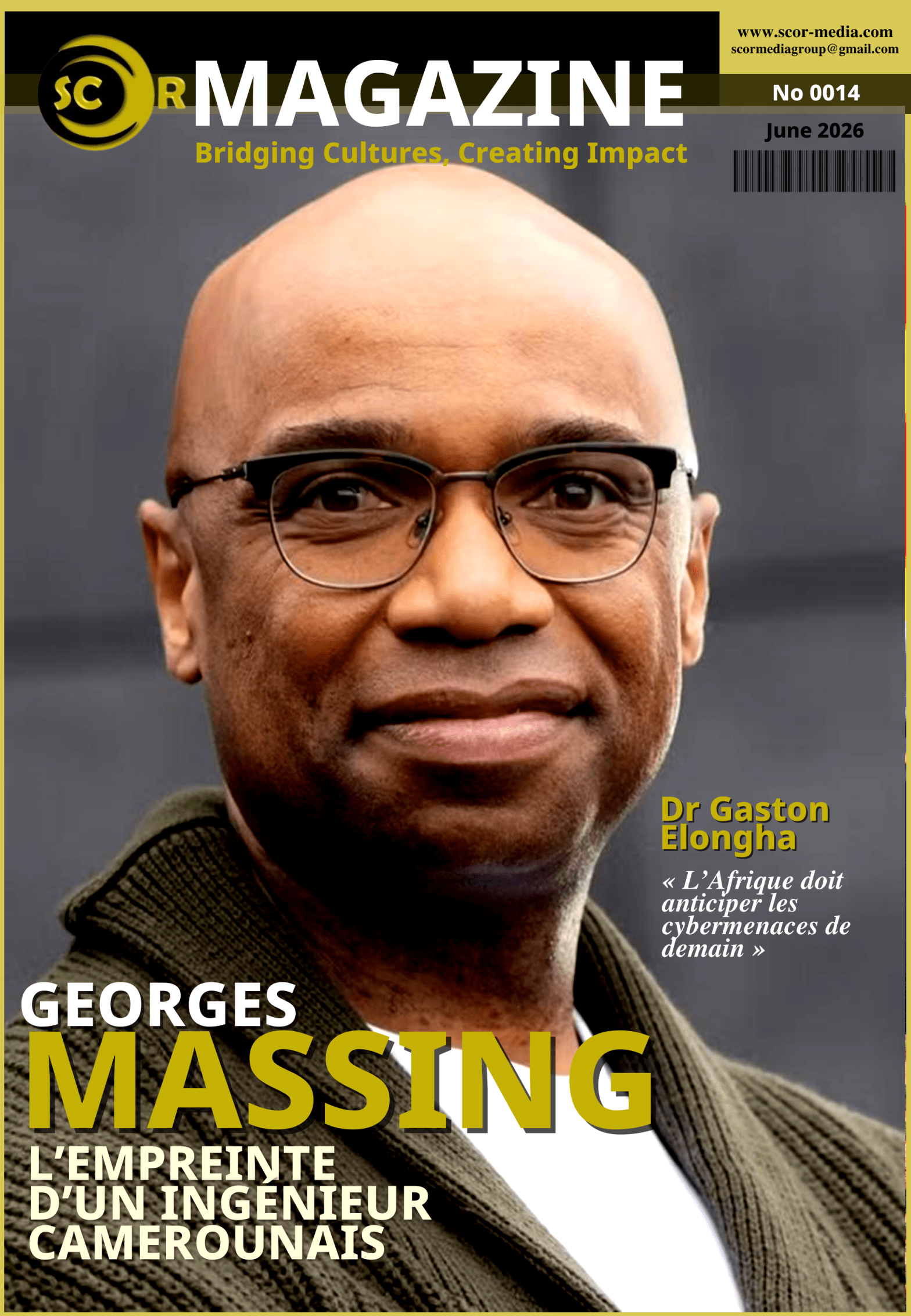
This momentum is equally visible in science and technology. In Benin, Marielle Agbahoungbata is using artificial intelligence to address challenges related to access to clean water. In Gabon, Michkath Omanda Bouraima contributes to global research on the reliability of AI systems. The journey of Georges Massing within the international automotive industry, as well as the recognition of Dr Gaston Elongha Lowolo in the United States, prove that African talents are now playing an active role in major global technological transformations.

Yet, this advancing Africa is not limited to laboratories and research centers. The story of Brightgrillzz in Nigeria illustrates the rise of borderless African entrepreneurship. Meanwhile, the journey of His Majesty Simon Bell reminds us that modernity and tradition can coexist within contemporary Africa.

Even the African diaspora contributes to this dynamic, as demonstrated by Africa Day Australia 2026 in Melbourne, a symbol of an Africa whose influence now extends across the globe.

The real challenge ahead is clear: transforming these individual achievements into collective continental power. Because the 21st century could well become the century of an Africa that no longer seeks merely to exist in the world, but to help redefine it.

SCOR MAGAZINE No14

LE TEMPS DE L’AFRIQUE QUI CRÉE : LE NOUVEAU PANAFRICANISME DES TALENTS, DE L’INNOVATION ET DE LA SOUVERAINETÉ

Longtemps racontée à travers les crises, les dépendances ou les instabilités, l’Afrique écrit aujourd’hui une autre histoire. Une histoire portée par une génération qui entreprend, innove, cherche, produit et influence. Le panafricanisme moderne ne se limite plus aux discours politiques hérités des indépendances : il prend désormais la forme de startups technologiques, de recherches scientifiques, d’industries innovantes, de leadership culturel et d’ambitions économiques continentales.

Les sujets de cette édition illustrent cette transformation profonde. Face au défi de l’industrialisation, les PME africaines tentent de bâtir des modèles capables de transformer localement les ressources du continent. Dans le secteur agricole, des initiatives comme FarmEase montrent que la technologie peut devenir un outil de souveraineté alimentaire africaine.

Cette dynamique se retrouve également dans les domaines scientifiques et technologiques. Au Benin, Marielle Agbahoungbata utilise l’intelligence artificielle pour répondre aux défis liés à l’eau potable. Au Gabon, Michkath Omanda Bouraima contribue aux recherches mondiales sur la fiabilité de l’IA. Le parcours de Georges Massing dans l’industrie automobile internationale ou celui du Dr Gaston Elongha Lowolo consacré aux États-Unis démontrent que les talents africains participent désormais aux grandes mutations technologiques mondiales.

Mais cette Afrique qui avance ne se limite pas aux laboratoires. L’histoire de Brightgrillzz au Nigeria illustre l’émergence d’un entrepreneuriat africain sans frontières. Celle de His Majesty Simon Bell rappelle que modernité et traditions peuvent coexister dans l’Afrique contemporaine.

Même la diaspora participe à cette dynamique, comme l’a montré Africa Day Australia 2026 à Melbourne, symbole d’une Afrique influente à l’échelle mondiale.

Le véritable défi désormais est clair : transformer ces réussites individuelles en puissance collective continentale. Car le XXIe siècle pourrait bien être celui d’une Afrique qui ne veut plus seulement exister dans le monde, mais contribuer à le redéfinir.

SCOR MAGAZINE No13 : AFRICA BETWEEN SOVEREIGNTY, INFLUENCE AND THE REDEFINITION OF GLOBAL POWER

Africa is undergoing a profound phase of reconfiguration where every sector is becoming a strategic field. From culture to energy, from sport to space, a single movement is emerging: the determination to exist not as a periphery, but as a structuring actor in global power.

The idea of a New African New Year goes beyond mere celebration. It reflects a quest for symbolic sovereignty, the need to define one’s own benchmarks, temporal frameworks, and narratives. In a world dominated by the battle of imaginaries, controlling symbolism is itself a form of power.

On the economic front, energy has become a geopolitical instrument, and the challenge is no longer limited to extraction, but to transforming this wealth into leverage for negotiation and sovereignty. This is what explains the boycott by African countries of the African Energy Summit, to be held in Great Britain. In the same movement, Africa’s space ambitions mark a historic shift. The continent’s gradual entry into the space sector is not about prestige, but about technological sovereignty: data, connectivity, Earth observation, and digital independence are becoming structural priorities.

Culture, meanwhile, stands as Africa’s most visible tool of projection. Music, cinema, and digital creation: Africa is now shaping global trends. But this influence remains incomplete as long as it is not supported by strong industries capable of controlling production, distribution, and the economic value of content. The issue of art restitution extends this dynamic. It is not merely a heritage gesture, but a question of historical legitimacy and narrative reappropriation. Art thus becomes a space of political and memorial confrontation.

Finally, the 2026 World Cup highlights a persistent contradiction: a proclaimed universality that remains uneven in practice. Economic and administrative barriers imposed on many African supporters reveal the concrete limits of global inclusion.

Across these different fields, a common reality emerges: Africa is gaining visibility but still seeking structural consolidation. The main challenge is no longer expressing its potential, but transforming it into organized power.

SCOR MAGAZINE No13 : L’AFRIQUE ENTRE SOUVERAINETÉ, INFLUENCE ET REDÉFINITION DU POUVOIR MONDIAL

L’Afrique traverse une phase de recomposition profonde où chaque secteur devient un champ stratégique. De la culture à l’énergie, du sport au spatial, un même mouvement se dessine : la volonté d’exister non plus comme périphérie, mais comme acteur structurant de la puissance mondiale.

L’idée d’un Nouveau Nouvel An africain dépasse la simple célébration. Elle traduit une quête de souveraineté symbolique, celle de définir ses propres repères, ses propres temporalités, ses propres récits. Dans un monde dominé par la bataille des imaginaires, maîtriser le symbolique revient à exercer une forme de pouvoir.

Sur le plan économique, l’énergie est devenue un instrument géopolitique, et l’enjeu n’est plus seulement l’exploitation, mais la capacité à transformer cette richesse en levier de négociation et de souveraineté. C’est ce qui justifie le boycott des pays africains à l’African Energy Summit, qui se tiendra en Grande-Bretagne. Dans le même mouvement, les ambitions spatiales africaines marquent une rupture historique. L’entrée progressive du continent dans le domaine spatial ne relève pas du prestige, mais de la souveraineté technologique : données, connectivité, observation et indépendance numérique deviennent des enjeux structurants.

La culture, elle, s’impose comme l’outil le plus visible de projection africaine. Musique, cinéma, création digitale : l’Afrique influence désormais les tendances globales. Mais cette puissance reste incomplète tant qu’elle n’est pas consolidée par des industries solides capables de maîtriser la production, la diffusion et la valeur économique des contenus. La question de la restitution des œuvres d’art prolonge cette dynamique. Elle ne se limite pas à un geste patrimonial, mais interroge la légitimité historique et la réappropriation des récits. L’art devient ainsi un espace de confrontation politique et mémorielle.

Enfin, la Coupe du monde 2026 rappelle une contradiction persistante : celle d’une universalité proclamée mais inégalement accessible. Les barrières économiques et administratives imposées à de nombreux supporters africains révèlent les limites concrètes de l’inclusion globale.

De ces différents champs émerge une réalité commune : l’Afrique progresse en visibilité, mais reste en quête de structuration. Le défi majeur n’est plus l’expression de son potentiel, mais sa consolidation en puissance organisée.

SCOR MAGAZINE No12 : WHEN GLOBAL CRISES KNOCK ON AFRICA’S DOOR

In a globalized world, no crisis remains confined to a single region. The tensions currently shaking the Middle East, particularly around Iran, are a reminder of how fragile and interconnected international balances truly are.

For Africa, the consequences of such crises can be far-reaching: soaring energy prices, disruptions in global supply chains, pressure on national economies, and the reshaping of diplomatic alliances. A conflict thousands of kilometers away can therefore have very real effects on the cost of fuel, the price of food, and the stability of markets.

Yet these global turbulences also reveal another reality: Africa’s growing strategic role in international economic and energy dynamics. Rich in natural resources, endowed with significant demographic potential, and positioned at the crossroads of major trade routes, Africa is increasingly becoming a highly sought-after partner.

In the face of global uncertainty, the challenge for African leaders is clear: strengthen the continent’s economic resilience, invest in energy sovereignty, and turn international crises into opportunities for development.

More than ever, Africa must define its place in the emerging new world order.

The 2025 Africa Cup of Nations did not just produce a winner, it exposed the deep flaws in the governance of African football.

CAF’s decision to strip Senegal of the title and award it to Morocco off the pitch, weeks after the final, has sent shockwaves across the continent.

Beyond the verdict itself, it is the very credibility of the competition that is now under scrutiny. Between delayed regulatory decisions, legal disputes, and potential appeals to the Court of Arbitration for Sport, AFCON 2025 leaves behind the image of a title decided more in offices than on the field.

More than ever, African football stands at a crossroads: restore trust, clarify its rules, and protect the very essence of the game, one that should be decided on the pitch, not behind closed doors.

SCOR MAGAZINE No12 : QUAND LES CRISES DU MONDE FRAPPENT AUX PORTES DE L’AFRIQUE

Dans un monde globalisé, aucune crise ne reste confinée à une région. Les tensions qui secouent aujourd’hui le Moyen-Orient, notamment autour de Iran, rappellent à quel point les équilibres internationaux sont fragiles et interconnectés.

Pour l’Afrique, les conséquences de ces crises peuvent être multiples : flambée des prix de l’énergie, perturbation des chaînes d’approvisionnement, pression sur les économies nationales et recomposition des alliances diplomatiques. Un conflit à des milliers de kilomètres peut ainsi avoir des effets concrets sur le coût du carburant, le prix des denrées alimentaires ou la stabilité des marchés.

Mais ces turbulences mondiales révèlent également une autre réalité : le rôle stratégique croissant de l’Afrique dans les équilibres économiques et énergétiques internationaux. Riche en ressources naturelles, dotée d’un potentiel démographique considérable et située au carrefour de routes commerciales majeures, l’Afrique devient un acteur de plus en plus courtisé.

Face aux incertitudes du monde, le défi pour les dirigeants africains est clair : renforcer la résilience économique du continent, investir dans la souveraineté énergétique et transformer les crises internationales en opportunités de développement.

Plus que jamais, l’Afrique doit penser sa place dans le nouvel ordre mondial qui se dessine.

La Coupe d’Afrique des Nations 2025 n’a pas seulement livré un vainqueur : elle a surtout exposé les fragilités de la gouvernance du football africain.

La décision de la CAF de retirer le titre au Sénégal pour l’attribuer au Maroc sur tapis vert, plusieurs semaines après la finale, a provoqué une onde de choc sans précédent.

Au-delà du verdict, c’est la crédibilité même de la compétition qui est aujourd’hui questionnée. Entre règlements appliqués tardivement, contestations juridiques et recours annoncés devant le TAS, la CAN 2025 laisse l’image d’un sacre confisqué au profit d’une bataille administrative.

Plus que jamais, le football africain est à un tournant : restaurer la confiance, clarifier ses règles et protéger l’essence même du jeu, celle qui se décide sur le terrain, et non dans les bureaux.